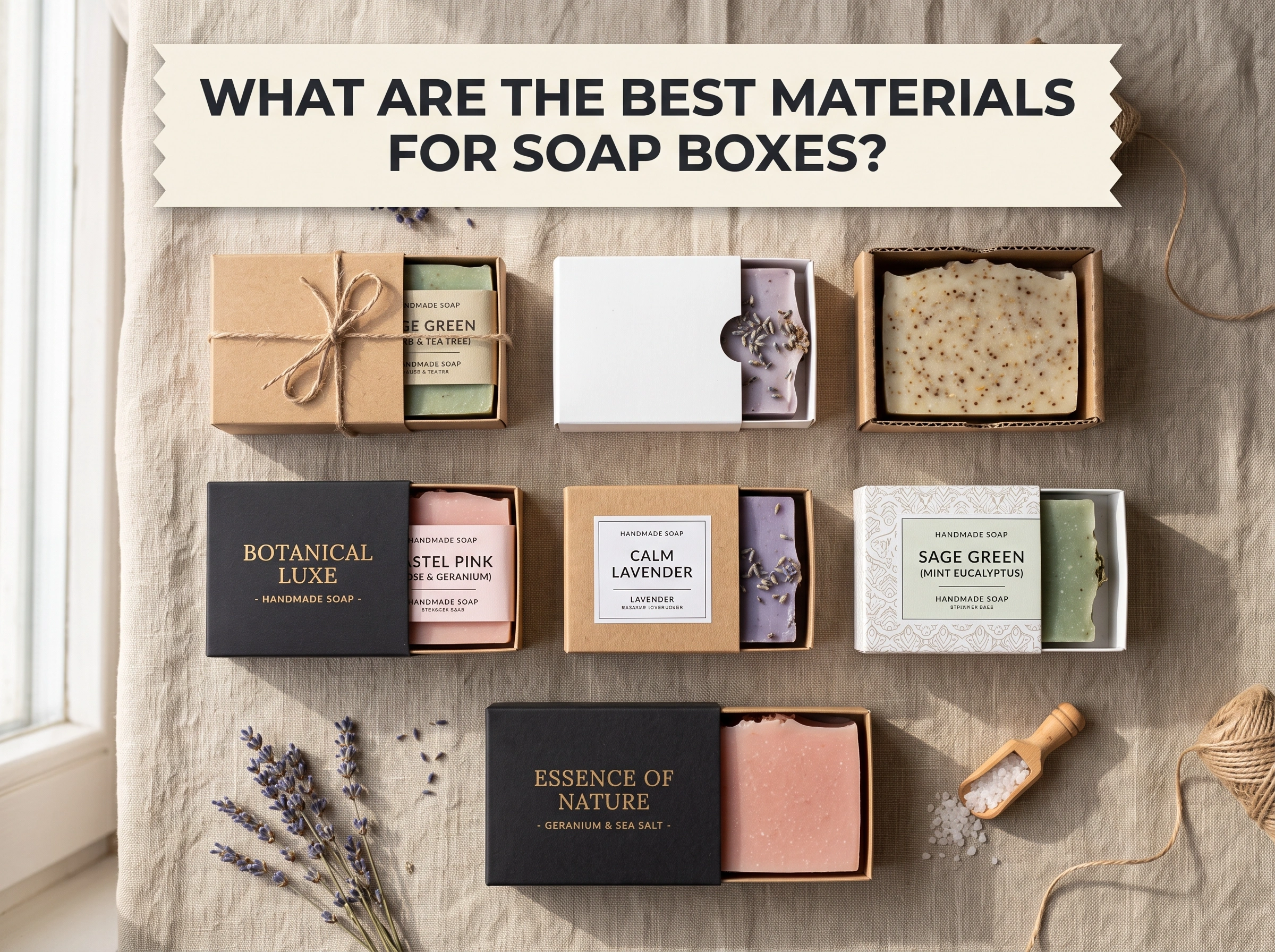
Picture this: a customer picks up your soap, feels the box, and smiles before they even smell it. That’s the power of great packaging.
If you make or sell soap, your box does three big jobs. It protects your soap. It shows off your brand. And it helps customers trust you. But here’s the tricky part not all soap box materials work the same way.
After helping hundreds of soap makers choose the right soap packaging, we’ve learned what works and what fails. In this guide, you’ll find the best materials for soap boxes, a simple comparison table, real costs, and answers to the questions soap sellers ask most.
Let’s dive in.
Quick Answer
The best material for soap boxes is kraft paper for most handmade soap sellers. It’s strong, low-cost, eco-friendly, and prints well. If you sell luxury soap, choose rigid boxes. If you ship soap across the country, pick corrugated cardboard.
Now let’s look at each option so you can pick the perfect fit.
The 7 Best Materials for Soap Boxes
1. Kraft Paper Best Overall Choice
Kraft paper boxes are the top pick for handmade soap and artisan soap brands. Here’s why soap makers love them:
- Biodegradable and recyclable great for zero-waste soap packaging
- Natural brown look that fits the popular kraft aesthetic
- Low cost, even for small batch orders
- Easy to print with soy-based inks
Best for: Farmers markets, cold process soap, and eco-focused brands.
Watch out: Plain kraft can soak up moisture. Add a light coating if your soap has high oil content.
2. Cardstock (Paperboard) Best for Printing
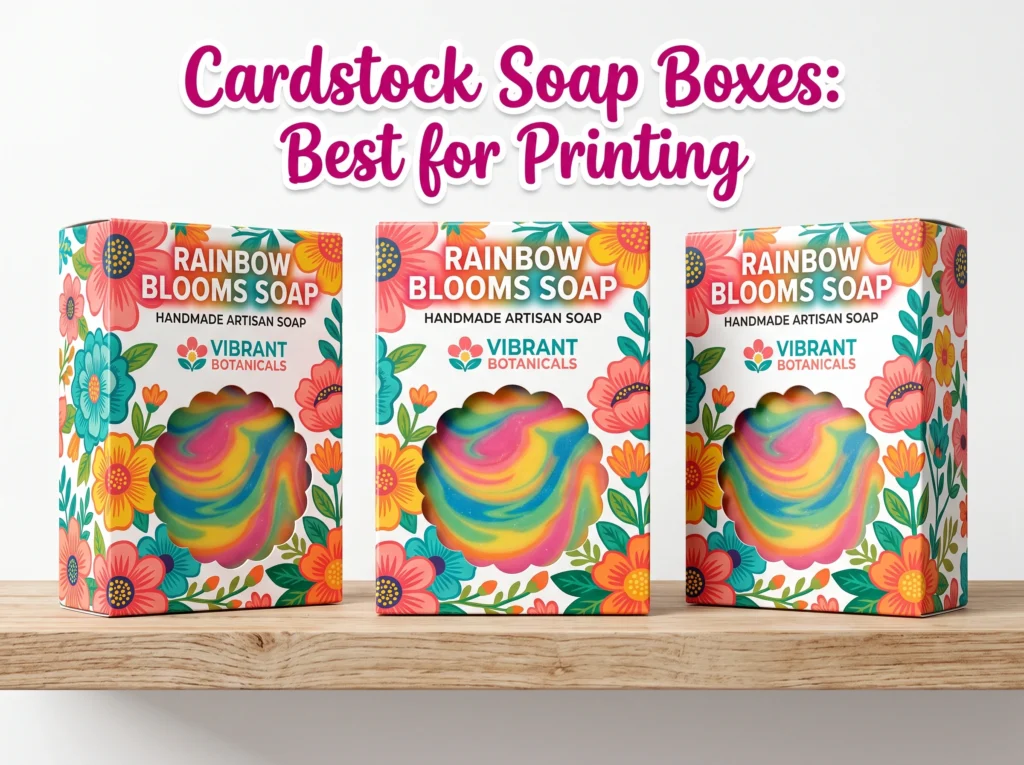
Cardstock packaging, also called paperboard or SBS board, gives you smooth, bright surfaces. Your colors pop. Your logo shines.
- Perfect for full-color custom printing
- Works well with die-cut windows so customers can see and smell the soap
- Light and easy to store flat
Best for: Retail shelves and brands that want strong shelf appeal.
3. Corrugated Cardboard Best for Shipping
Corrugated cardboard has a wavy layer inside that acts like a cushion. If you ship soap through the mail, this is your friend.
- Strongest product protection of any paper material
- Handles rough shipping without crushing
- Recyclable and often made from recycled paper
Best for: Online stores and wholesale soap boxes shipped in bulk.
4. Rigid Boxes Best for Luxury
Rigid boxes (made from thick chipboard) feel heavy and rich in the hand. Think of the box a fancy phone comes in.
- Creates an amazing unboxing experience
- Supports embossing, foil stamping, and magnetic closures
- Customers often keep and reuse them
Best for: Luxury soap packaging, gift sets, and premium brands.
Watch out: Rigid boxes cost the most. Save them for high-price products.
5. Recycled Paperboard Best Budget Eco Option
Made from post-consumer waste, recycled paper boxes let you go green without spending more.
- Lowest environmental footprint
- Look for FSC-certified boxes (approved by the Forest Stewardship Council)
- Fits the growing demand for plastic-free packaging
Best for: Brands that market themselves as sustainable.
6. Window Boxes Best for Display
Window soap boxes mix cardstock with a clear panel (now often made from plant-based film, not plastic).
- Customers see the soap before buying
- Great for colorful, swirled, or artisan soap bars
- Boosts trust at markets and shops
Best for: Soaps with beautiful designs that sell on looks.
7. Seed Paper & Specialty Materials Best for Standing Out
Plantable seed paper packaging is one of the biggest trending ideas in cosmetic packaging. Customers plant the box, and flowers grow. Talk about memorable!
- Perfect for compostable packaging fans
- Amazing for social media and the unboxing experience
- Pairs well with carbon-neutral shipping messaging
Best for: Brands that want buzz and word-of-mouth marketing.
Soap Box Material
| Material | Cost | Durability | Eco-Score | Print Quality | Best Use |
|---|---|---|---|---|---|
| Kraft paper | $ | Good | Excellent | Good | Handmade soap, markets |
| Cardstock (SBS) | $$ | Good | Good | Excellent | Retail shelves |
| Corrugated | $$ | Excellent | Very Good | Fair | Shipping, wholesale |
| Rigid boxes | $$$$ | Excellent | Fair | Excellent | Luxury, gifts |
| Recycled board | $ | Good | Excellent | Good | Eco brands |
| Window boxes | $$ | Good | Good | Very Good | Display, colorful soap |
| Seed paper | $$$ | Fair | Excellent | Fair | Marketing buzz |
What Thickness Should Your Soap Box Be?
Box thickness is measured in GSM (grams per square meter). Here’s a simple rule:
- 250–300 GSM light soaps, sleeves, and market displays
- 300–350 GSM the sweet spot for most bar soap boxes
- 350–400+ GSM heavy soaps, shipping, and premium products
Thicker isn’t always better. It costs more and can be harder to fold. Match the thickness to your soap’s weight and how far it travels.
How to Stop Soap From Sweating in the Box
This is the number one problem soap makers face. Cold process soap releases moisture, especially in humid weather. Here’s how to fix it:
- Cure your soap fully (4–6 weeks) before boxing it
- Choose breathable materials like uncoated kraft sealed plastic traps moisture
- Add a die-cut window or small vents for airflow
- Skip heavy lamination on boxes for fresh soap
- Store boxed soap in a cool, dry place
A breathable box keeps your soap firm, fresh, and scented exactly how customers want it.
How Much Do Custom Soap Boxes Cost?
Real numbers help you plan. Here’s what most soap makers pay per box:
- Kraft boxes: $0.20–$0.50 each (orders of 500+)
- Printed cardstock: $0.30–$0.80 each
- Corrugated mailers: $0.50–$1.20 each
- Rigid boxes: $2.00–$6.00 each
Ordering more lowers your per-box price. Many suppliers, including trusted names like Prefine Packaging, offer low minimums for small businesses so you don’t need to order thousands to get started.
Eco-Friendly Soap Packaging: What Customers Want in 2026
Shoppers now check packaging before they buy. Recent retail surveys show most buyers prefer brands with sustainable packaging. Here’s what’s trending:
- Plastic-free packaging paper bands and boxes instead of shrink wrap
- Compostable packaging breaks down in home compost bins
- Refillable and naked packaging minimal or reusable designs
- FSC certification proof your paper comes from responsible forests
- Minimalist packaging design clean, simple, and less waste
Going green isn’t just kind to the planet. It’s smart marketing that builds trust and repeat sales.
FAQs
What is the best material for soap packaging?
Kraft paper is the best all-around material. It’s affordable, biodegradable, breathable, and looks great with handmade soap. For luxury brands, rigid boxes are the top choice.
Is kraft paper good for soap boxes?
Yes! Kraft paper is strong, low-cost, and eco-friendly. It also lets soap breathe, which prevents sweating. Just add a light coating if your soap is extra oily.
How do you package handmade soap so it doesn’t sweat?
Cure your soap for 4–6 weeks first. Then use breathable materials like uncoated kraft boxes with vents or windows. Avoid sealing fresh soap in plastic or coated boxes.
Are cardboard soap boxes waterproof?
Standard cardboard is not waterproof. You can add a water-resistant coating or lamination, but full waterproofing usually isn’t needed moisture resistance is enough for most soap.
What is the most eco-friendly soap packaging?
Recycled kraft paper and seed paper are the greenest options. Look for FSC-certified, compostable, and plastic-free materials printed with soy-based inks.
Can soap be packaged without plastic?
Absolutely. Paper bands, kraft boxes, and paper wraps protect soap without any plastic. Many top soap brands have gone 100% plastic-free.
What’s the difference between kraft and cardstock soap boxes?
Kraft has a natural brown, rustic look and is more breathable. Cardstock is smooth and white, so it prints bright colors better. Kraft fits eco brands; cardstock fits colorful retail brands.
How much do custom soap boxes cost?
Most custom soap boxes cost between $0.20 and $1.00 each, depending on material, size, and order amount. Luxury rigid boxes cost $2.00–$6.00 each.
Final Thoughts
There’s no single “perfect” soap box there’s the perfect box for your soap. Here’s the simple recap:
- Selling at markets? Go with kraft paper.
- Selling in stores? Choose printed cardstock with a window.
- Shipping online orders? Use corrugated cardboard.
- Selling premium gifts? Invest in rigid boxes.
- Building an eco brand? Pick recycled or seed paper.
Your packaging is the first thing customers touch. Make it count, and your soap will practically sell itself.
Ready to level up your packaging? Start with a small test order, get customer feedback, and grow from there.