You pick up a cereal box almost every morning but have you ever wondered why it is exactly that tall, or that wide? The answer is more fascinating than you might think! This guide covers everything about cereal box dimensions, from standard cereal box size to family size and mini cereal box formats with real measurements in inches and centimeters, smart pantry storage tips, and surprising food packaging science.
Standard Cereal Box Dimensions
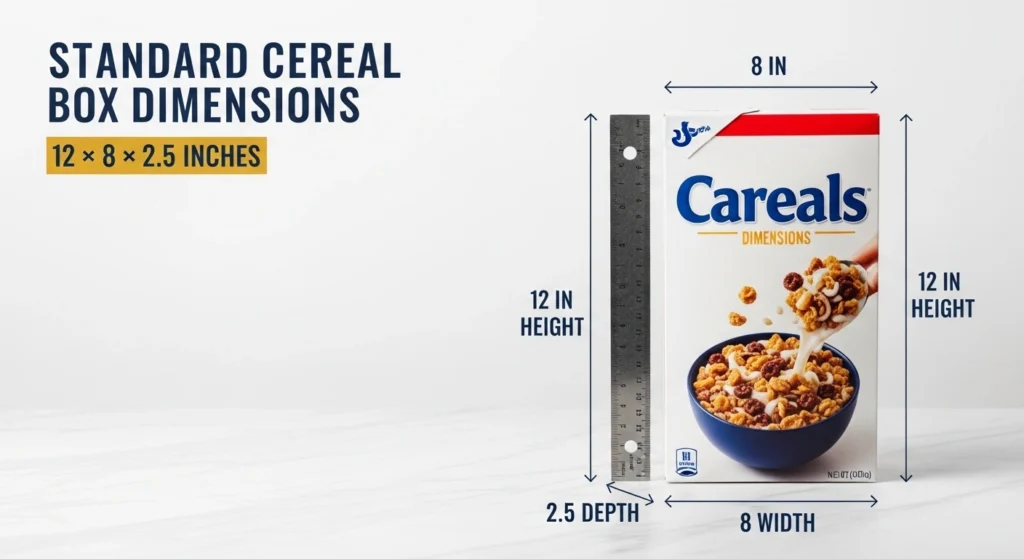
Walk into any grocery store and grab a box off the shelf. Chances are, you are holding a standard cereal box with dimensions of roughly 12 × 8 × 2 inches. That works out to 30.5 × 20.3 × 5 cm in cereal box measurements in centimeters. These numbers are not random they are the result of decades of retail merchandising, consumer psychology, and food packaging science working together.
Some brands go slightly larger at 12 × 8 × 2.5 inches, giving their breakfast cereal box a bit more depth. That extra half-inch of depth matters: it holds more product, keeps corrugated cardboard from bowing outward, and gives the rectangular cereal packaging better structural integrity on the shelf.
Quick Fact: A standard cereal box measuring 12 × 8 × 2.5 inches has a total cereal box volume of about 240 cubic inches equal to roughly 3.9 liters of box space. The actual cereal fills less than this because air space is needed to protect the product during shipping and handling.
The height of a cereal box is one of the most carefully chosen measurements in all of food-grade packaging. Most grocery store shelves are built to hold products between 10 and 14 inches tall. A 12-inch box fits right in the sweet spot tall enough to catch your eye, short enough to stack neatly without toppling.
All Cereal Box Sizes at a Glance
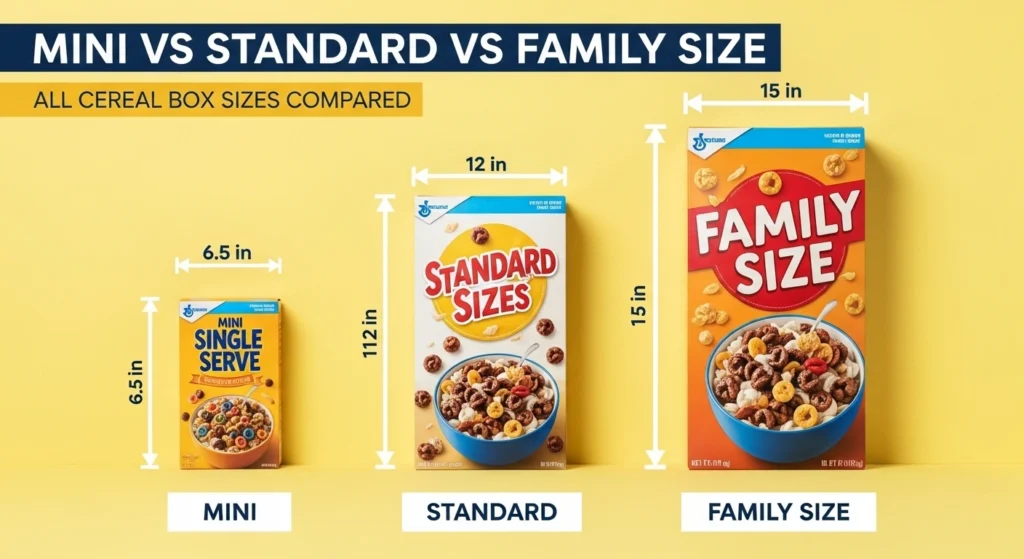
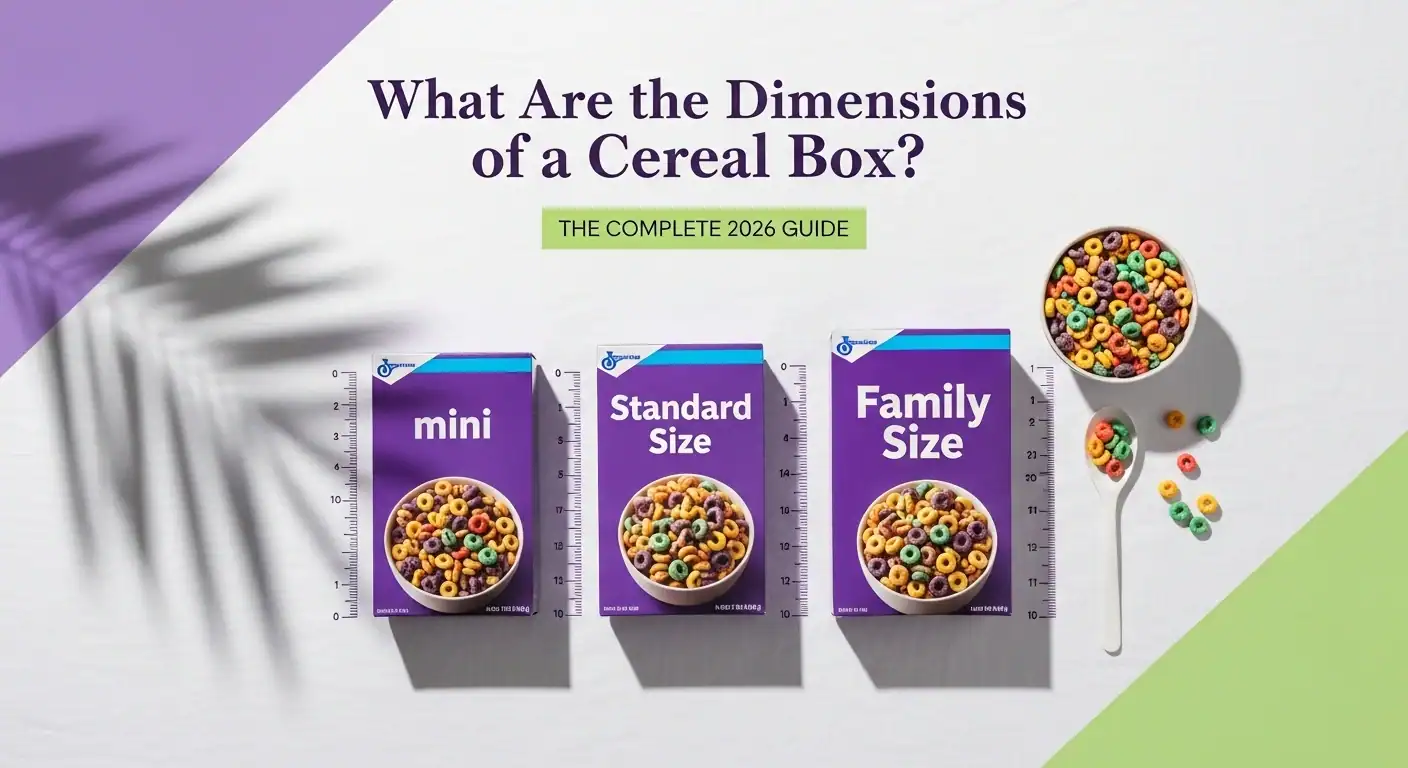
Cereal packaging dimensions vary across three main categories. Whether you are shopping for yourself, your whole family, or packing a lunch bag, there is a cereal container dimension built for you.
- Mini / Single-Serve Box
- Height: 6–7 inches (15–18 cm)
- Width: 4 inches (10.2 cm)
- Depth: 1.5 inches (3.8 cm)
- Weight: 1–3 oz | Servings: 1
- Standard / Regular Box
- Height: 12 inches (30.5 cm)
- Width: 7.5–8 inches (19–20.3 cm)
- Depth: 2–2.5 inches (5–6.3 cm)
- Weight: 12–18 oz | Servings: 8–12
- Family Size Box
- Height: 15–16 inches (38–40.6 cm)
- Width: 10 inches (25.4 cm)
- Depth: 3 inches (7.6 cm)
- Weight: 20–24 oz | Servings: 15–20
- Giant / Bulk Box
- Height: 18+ inches (45+ cm)
- Width: 10–12 inches
- Depth: 3–4 inches
- Weight: 24–30 oz | Servings: 20–28
Cereal Box Dimensions in Inches & CM
| Size Type | Height | Width | Depth | Weight | Servings |
|---|---|---|---|---|---|
| Mini / Single-Serve | 6–7 in (15–18 cm) | 4 in (10.2 cm) | 1.5 in (3.8 cm) | 1–3 oz | 1 |
| Standard / Regular | 12 in (30.5 cm) | 7.5–8 in (19–20.3 cm) | 2–2.5 in (5–6.3 cm) | 12–18 oz | 8–12 |
| Family Size | 15–16 in (38–40.6 cm) | 10 in (25.4 cm) | 3 in (7.6 cm) | 20–24 oz | 15–20 |
| Giant / Bulk | 18+ in (45+ cm) | 10–12 in | 3–4 in | 24–30 oz | 20–28 |
How Tall Is a Cereal Box? (And Why It Matters)
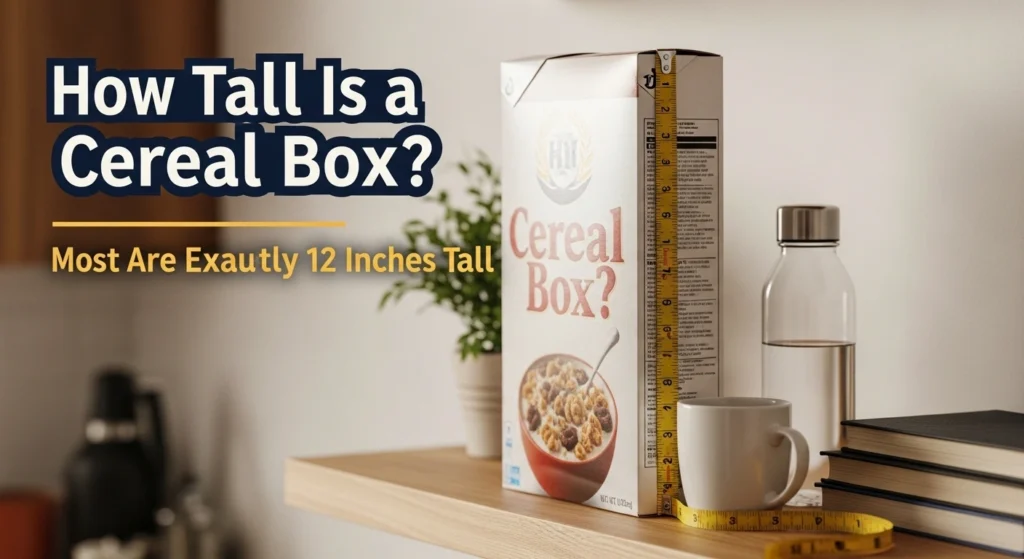
When people search how tall is a cereal box, they usually expect a simple number. Here it is: most standard cereal boxes are 12 inches tall. But the real story behind that number is what makes breakfast cereal packaging so interesting.
Taller boxes signal premium quality. Brands like Cheerios, Wheaties, and Frosted Flakes have used box height as a visual cue for value and portion size for decades. A taller box gives more room for cereal box design, branding, and nutritional labels all of which influence your buying decision before you even pick the box up.
Eye-level placement drives the highest grocery aisle shelf space sales. Retail studies show that products placed at eye level roughly 54 to 66 inches off the ground outsell items placed lower. A 12-inch box sits perfectly in this prime zone.
Pro Tip for Pantry Storage: Knowing that a standard cereal box is 12 inches tall helps you plan pantry shelf spacing. Leave at least 13–14 inches of clearance per shelf so boxes stand upright without bending or tipping over.
Family Size Cereal Box Dimensions
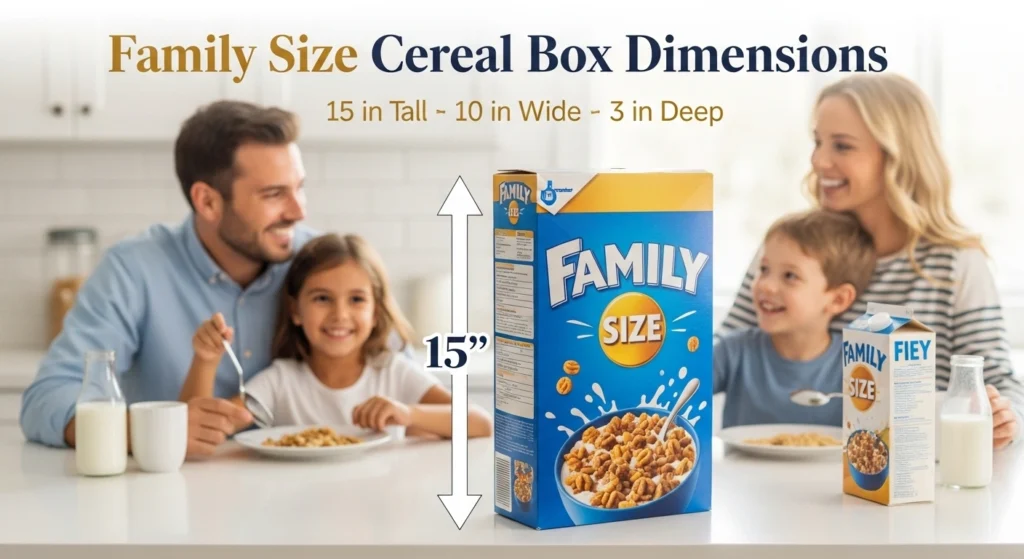
If your household goes through cereal quickly, a family size cereal box is your best friend. These boxes are designed to be cost-effective and convenient for larger families. A family size cereal box typically stands 15 inches tall, measures 10 inches wide, and sits 3 inches deep. That gives you roughly 20 to 24 ounces of cereal, or about 15 to 20 servings.
A family size box is about 20% larger than the standard box. That extra volume is a great deal for value-conscious shoppers, especially for popular brands like Cinnamon Toast Crunch, Lucky Charms, and Honey Bunches of Oats. The larger cardboard cereal box also provides more surface area for fun graphics, cereal mascots, recipes, and games things families love.
World Record: The world’s largest cereal box made by DIFCO measured an incredible 3.22 m × 1.26 m × 4.52 m! That is a Guinness World Record that puts even the biggest bulk cereal boxes to shame.
Mini Cereal Box Dimensions
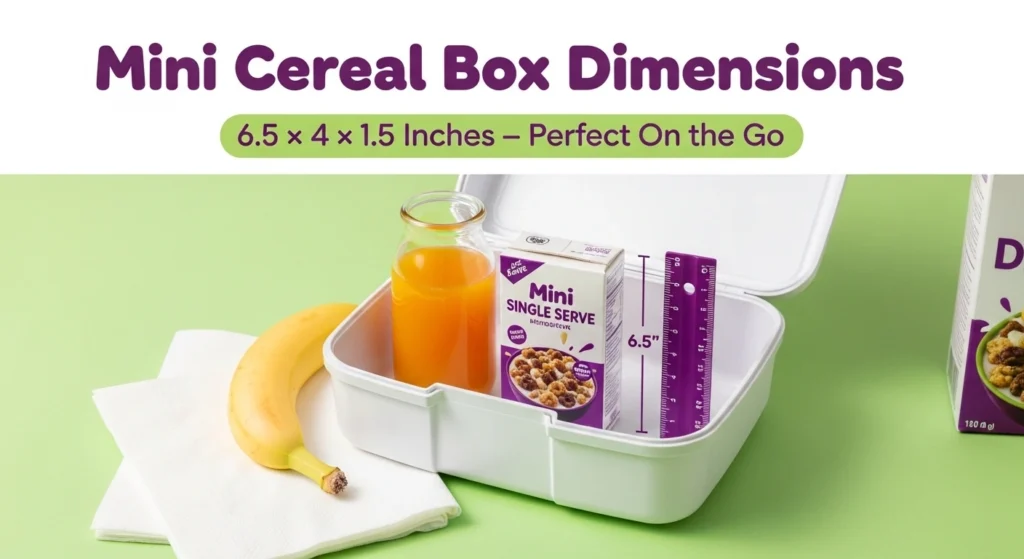
Mini cereal box dimensions are perfect for portion control, hotel breakfasts, school lunches, and on-the-go snacking. These small cereal boxes typically measure 6.5 inches tall × 4 inches wide × 1.5 inches deep small enough to fit in a lunchbox, big enough to give you a satisfying serving.
Single-serve cereal boxes often come in mini cereal boxes variety packs, letting you enjoy multiple flavors without committing to a big box. This trend aligns perfectly with rising demand for convenient packaging, sustainable cereal packaging, and on-the-go snacks all of which are growing fast in 2026.
From a sustainability standpoint, mini cereal boxes also help reduce food waste. Instead of a large box going stale before it is finished, a single-serving cereal box gives you exactly what you need no more, no less. This makes them a smart choice for eco-conscious shoppers who care about reducing waste and making smarter buying decisions.
Cereal Box Dimensions in MM & CM
Need the measurements in metric? Here is how a standard cereal box size in cm and millimeters breaks down:
| Measurement | Inches | Centimeters | Millimeters |
|---|---|---|---|
| Height | 12 in | 30.48 cm | 304.8 mm |
| Width | 8 in | 20.32 cm | 203.2 mm |
| Depth | 2.5 in | 6.35 cm | 63.5 mm |
| Volume | 240 cu in | 3,933 cm³ | 3,932,735 mm³ |
These cereal box measurements are the foundation of food packaging dimensions used by leading brands like Kellogg’s, General Mills, Nestlé, Post Consumer Brands, and Quaker Oats. Every millimeter is a deliberate design choice made by packaging engineers who understand how grocery store shelf space and consumer psychology work together.
How to Measure a Cereal Box
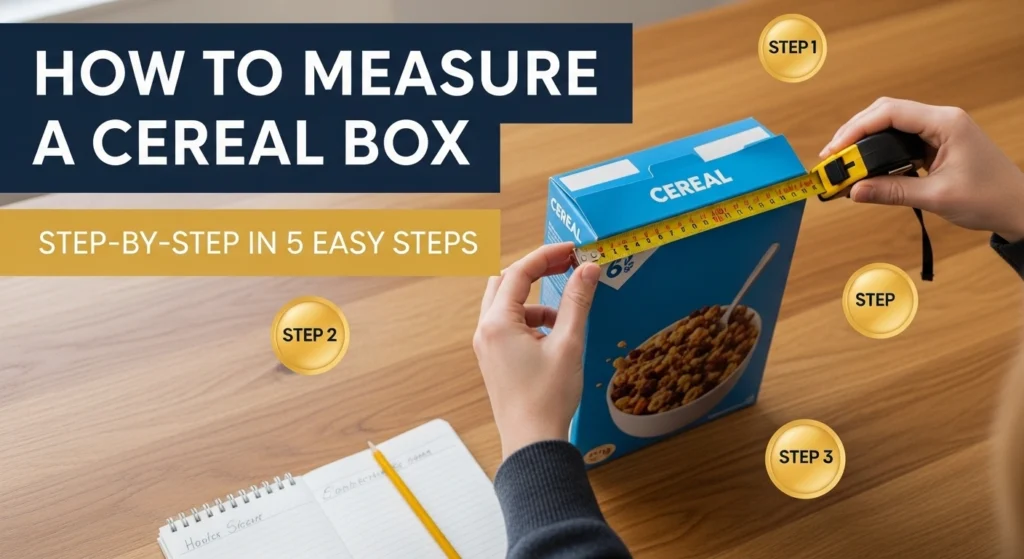
Knowing how to measure a cereal box is a useful skill whether you are organizing a pantry storage system, solving a cereal box volume math problem, or designing custom cereal box packaging. Here is a simple step-by-step process:
Step 1 Gather your tools: A measuring tape or ruler and a notepad are all you need.
Step 2 Measure the height: Place the box on a flat surface. Measure vertically from the base to the top edge. This is your cereal box height.
Step 3 Measure the width: Face the front of the box and measure across from left to right. This is the width of a cereal box.
Step 4 Measure the depth: Measure from front to back. This is also called the thickness of the box.
Step 5 Calculate the volume: Use the formula V = Length × Width × Height to find the total cereal box cubic inches.
Volume Formula Example: For a standard box (12 × 8 × 2.5 in): V = 12 × 8 × 2.5 = 240 cubic inches ≈ 3.9 liters
Why Cereal Box Dimensions Are Engineered to Sell
Cereal box dimensions are not just about fitting flakes they are engineered to sell. Every measurement reflects careful thinking in consumer psychology, retail merchandising, and packaging design strategy.
Height = Perceived Premium Value Taller boxes catch the eye and suggest a bigger, better product. That is why family size boxes stand 15–16 inches tall the extra height signals value. Even millimeter-level changes in height can influence how shoppers perceive the product before they even read the label.
Width = Branding Real Estate The wider the cereal box, the more room for bold cereal box art, mascots, and typography. The slightly wider design of Cinnamon Toast Crunch, for example, allows for larger characters that are especially appealing to families and kids.
Depth = Structural Integrity Depth plays a key role in protecting your cereal. Too thin and the paperboard bows and cereals break. Too deep and you waste corrugated packaging material. The standard 2–3 inch depth is the perfect balance for food-grade packaging that survives shipping, stacking, and everyday handling.
Popular Brand Cereal Box Sizes
| Brand / Product | Height | Width | Depth | Size Type |
|---|---|---|---|---|
| Cheerios (Standard) | 11.25 in | 7.75 in | 1.625 in | Standard |
| Frosted Flakes (Standard) | 12.375 in | 8.375 in | 2.625 in | Standard |
| Cinnamon Toast Crunch | ~12 in | 8.5 in | 2.5 in | Standard |
| Lucky Charms (Family) | ~15 in | 10 in | 3 in | Family Size |
| Wheaties / Coco Pops | ~12 in | 8 in | 1.75 in | Standard |
| Hotel / Variety Mini Pack | 6.5 in | 4 in | 1.5 in | Mini / Single-Serve |
Trending 2026: How Cereal Box Sizes Are Changing

The world of cereal packaging is evolving fast. Here are the biggest trends shaping cereal box dimensions and design right now.
Eco-friendly cereal packaging is the top trend of 2026. Brands are switching from standard paperboard to recycled cardstock and plant-based inks. Some are exploring resealable cereal box designs that eliminate the need for an inner plastic bag a win for freshness and sustainable cereal packaging at the same time.
Custom cereal box design is booming. Small brands and private-label makers are using custom cereal box dimensions and premium finishes like foil stamping and embossed logos to stand out in a crowded aisle. Luxury custom packaging boxes with unique shapes and specialty materials are growing fast, especially in the health and wellness cereal category.
E-commerce compatibility is reshaping box depth and strength. As online grocery shopping continues to grow, brands are adjusting cereal box size for pantry storage and shipping durability. Stronger corrugated packaging and smarter stackable designs are becoming the new industry standard.
Mini cereal boxes variety packs are surging in popularity, driven by snacking culture and on-the-go lifestyles. Resealable formats, cylindrical cereal containers, and even Tetra pack-style packaging are entering the breakfast aisle as exciting alternatives to the classic rectangular box.
Cereal box template printable searches are also booming, driven by teachers, parents, and DIY crafters who use empty cereal boxes for school projects, dioramas, gift boxes, and cereal box craft ideas.
Frequently Asked Questions
What are the dimensions of a standard cereal box?
A standard cereal box typically measures 12 inches tall × 8 inches wide × 2–2.5 inches deep (about 30.5 × 20.3 × 5–6.3 cm). It holds 12 to 18 ounces of cereal and provides about 8 to 12 servings per box.
How tall is a family size cereal box?
A family size cereal box is typically 15 inches tall, 10 inches wide, and 3 inches deep. It contains 20 to 24 ounces of cereal about 15 to 20 servings making it the most cost-effective choice for larger households and frequent cereal eaters.
What are mini cereal box dimensions?
A mini cereal box (single-serve) typically measures 6.5 × 4 × 1.5 inches and holds just 1–3 ounces of cereal perfect for portion control, hotel stays, school lunches, and variety packs.
What is the volume of a cereal box?
Using the formula V = L × W × H, a standard box (12 × 8 × 2.5 in) has a volume of 240 cubic inches, or about 3.9 liters. The actual cereal fills less because air space is needed to protect the product during shipping.
How many cups of cereal fit in a standard box?
A standard size cereal box (12–18 oz) typically holds 8 to 12 cups of cereal. A family size box (20–24 oz) holds about 15 to 24 cups, depending on the density of the cereal. Light, flaky cereals take more volume; dense granola cereals take less.
What material is a cereal box made from?
Most cereal boxes are made from paperboard or SBS cardstock (solid bleached sulfate), which balances durability, print quality, and food safety. Some brands now use kraft paper or recycled cardboard for a more eco-friendly cereal packaging option. Standard cardboard thickness is about 0.022 inches (0.056 cm).
Conclusion The Bottom Line
A cereal box is a marvel of everyday engineering. The standard cereal box dimensions of 12 × 8 × 2.5 inches and the larger family size at 15 × 10 × 3 inches exist because of decades of science, shelf psychology, and smart food packaging design.
Whether you are planning pantry storage, designing a custom cereal box, working on a cereal box volume math problem, or just curious about breakfast cereal packaging, knowing your cereal box measurements is genuinely useful. Now you have all the numbers in inches, centimeters, and millimeters plus the full story of why those numbers exist. Prefine Packaging with happy measuring and happy breakfast!