Picture this. You walk into a grocery store. Dozens of K-cup boxes line the shelves. Which one do you pick up first?
The answer is almost always the one with the best-looking package.
That is the power of K-cup packaging design. In 2026, this power is bigger than ever. The coffee pod market 2026 is booming. Millions of people use a single-serve coffee pod every morning. So brands are working hard to stand out on the shelf and online.
This guide covers everything you need to know about pod design trends this year. Whether you run a small roaster or manage a major coffee brand, these ideas will inspire you. Let us dive in!
Why K-Cup Packaging Design Matters More Than Ever in 2026
Coffee pod packaging does much more than protect your coffee. It tells a story. It builds trust. And it drives sales.
Here is why coffee capsule design is so important right now:
- The coffee pod market 2026 is expected to keep growing fast.
- Shoppers are choosing brands that look premium AND feel responsible.
- E-commerce means your package also needs to look great on a screen.
- Competition from brands like Nespresso, Starbucks K-Cup, Lavazza, Green Mountain Coffee, and Dunkin’ is fierce.
Great K-cup branding can make the difference between a first-time buyer and a loyal customer for life. That is a big deal.
Sustainability Is No Longer Optional
The biggest pod packaging 2026 trend? Going green and meaning it.
Shoppers today care deeply about the environment. They want eco-friendly pod packaging that actually works. Brands that get this right are winning big.
The Best Eco-Friendly Single-Serve Coffee Pod Packaging Materials in 2026
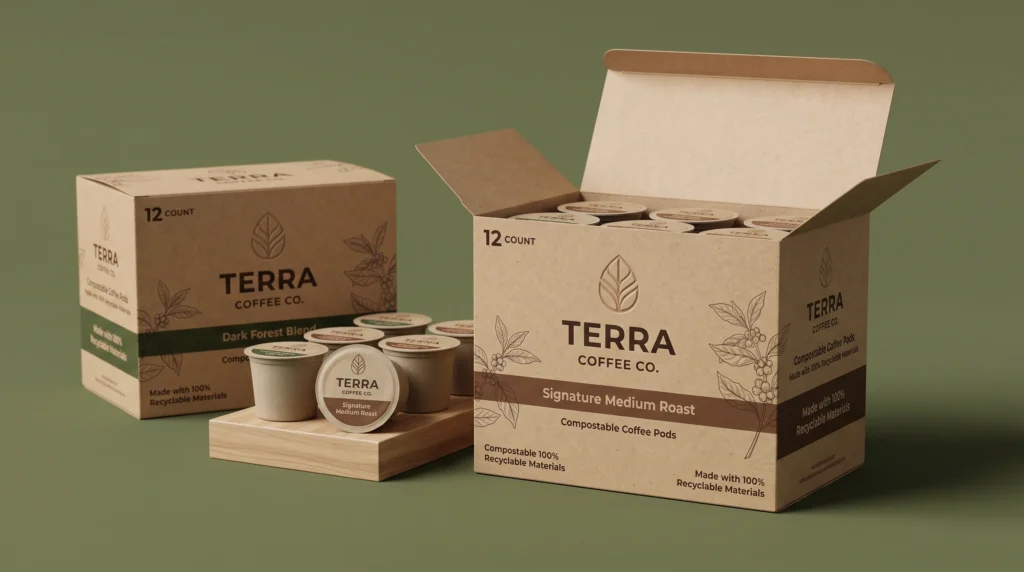
Here are the top sustainable materials shaping K-cup packaging design this year:
PLA (Polylactic Acid): This plant-based material is one of the hottest choices. PLA comes from corn starch or sugarcane. It breaks down much faster than regular plastic. Many brands are now using bio-based plastics like PLA for their pods.
Compostable Mesh Filters: Instead of solid plastic cups, some brands use a paper fiber pod or compostable mesh design. These pods break down naturally in home composting systems.
Mono-Material K-Cup Design: This is a fast-rising trend in regenerative packaging design. A mono-material K-cup design uses only one type of material usually PP (polypropylene). This makes recycling much easier and reduces waste.
Plant-Based Pod Film: The lid of a K-cup has always been tricky to make eco-friendly. But plant-based pod film is changing that. These lids seal tightly and still meet oxygen barrier sealing standards to keep coffee fresh.
To get certified, many brands are pursuing the BPI compostable cert, the How2Recycle label, and SFI/FSC certified paper components. These certifications help shoppers trust your green claims right away.
Pro Tip: If you want to know how to reduce carbon footprint of K-cup packaging design, start with material selection. Switching to biodegradable pod material and carbon-neutral coffee pack options can cut your environmental impact significantly.
Premium Aesthetics Are Getting Bolder and Smarter
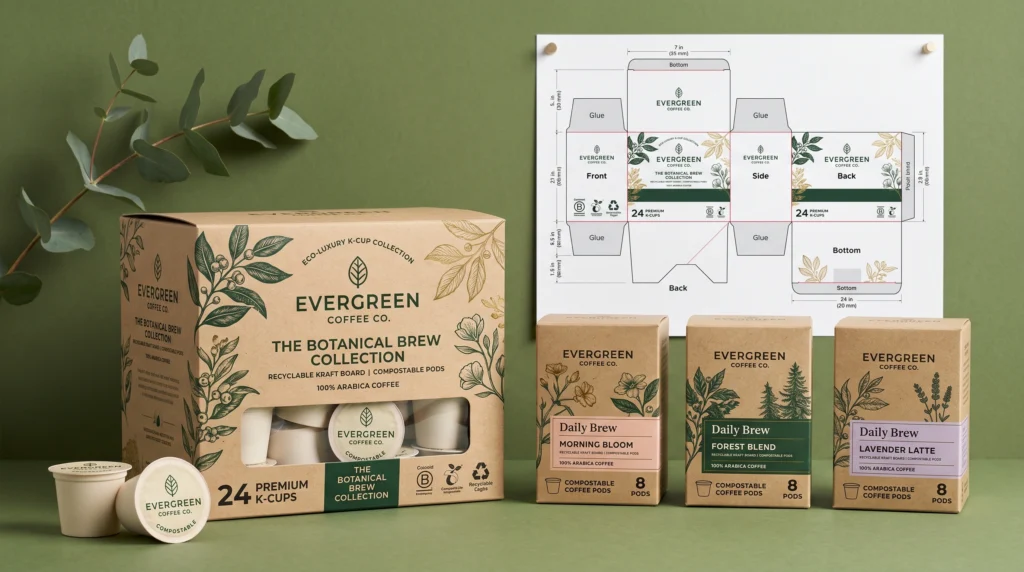
Sustainability alone does not sell coffee. Your packaging also needs to look amazing.
In 2026, two big visual directions are dominating pod design trends: clean minimalism and bold maximalism. Interestingly, both are thriving at the same time.
Minimalist Label Design for Specialty Coffee K-Cups
Third-wave coffee design is all about simplicity. Think clean white space, elegant label design typography, and subtle earthy tones. Brands like specialty roasters love this look. It says “premium” without screaming it.
For artisan roaster packaging and craft coffee pod aesthetic, minimalism works perfectly. Shoppers see clean design and immediately think quality. This style works especially well for private label K-cup packaging design for small roasters who want to look professional without a huge budget.
Key elements of minimalist coffee pod label design include:
- Sans-serif typography in cream, black, or warm gray
- Matte surfaces with soft UV spot coating accents
- Origin details and roast level packaging cues printed clearly
- Earthy illustration or simple line art
Bold Maximalist Capsule Illustration
On the flip side, bold maximalist capsule illustration is exploding in popularity. Big colors. Loud patterns. Expressive artwork covering the entire pod box.
Brands like Death Wish Coffee have led this charge. And in 2026, more brands are joining in. This style grabs attention fast especially on social media and e-commerce pages.
The Pantone 2026 palette plays a big role here. Expect rich teals, warm corals, electric yellows, and deep purples to dominate coffee capsule design this year. When thinking about bold vs minimalist color trends for coffee capsule packaging, the answer really depends on your target audience. Bold works for younger, adventure-seeking coffee lovers. Minimalist works for premium, thoughtful buyers.
Matte Tactile Finish Coffee Pods
One detail that shoppers love? The feel of a package in their hands.
Matte tactile finish coffee pods are trending hard in 2026. When someone picks up a box and feels that soft, velvety surface, it signals luxury. It says this coffee is worth the price.
Pairing a matte surface with selective UV spot coating on logos or illustrations creates a stunning contrast effect that feels truly premium.
Smart Packaging Is Changing the Game
CPG packaging innovation has entered a thrilling new era. In 2026, your coffee pod packaging can do so much more than hold coffee. It can connect with your customer digitally.
QR Code Interactive Packaging for Premium Coffee Pods
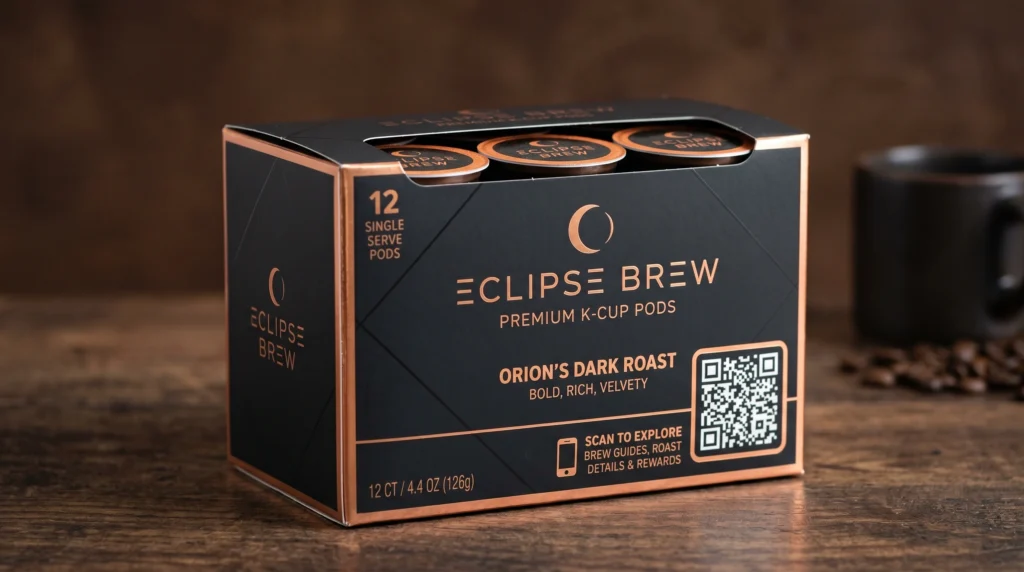
Smart packaging QR codes are one of the most exciting tools available right now. Place a QR/NFC smart label on your pod box, and customers can scan it to:
- Watch a video about your coffee farm
- Learn about Fair Trade packaging and Rainforest Alliance sourcing
- Access brewing tips and recipes
- Join your loyalty rewards program
- See transparent origin story packaging details farm name, altitude, harvest date
This kind of transparent origin story packaging builds a deep connection with customers. They feel like they know where their coffee comes from. That trust translates into repeat purchases.
NFC-Enabled Smart Coffee Packaging
NFC-enabled smart coffee packaging takes this even further. With NFC (Near Field Communication), customers tap their phone to the package no scanning needed. This seamless experience feels futuristic and exciting.
Brands investing in NFC-enabled smart coffee packaging are positioning themselves as leaders in CPG packaging innovation. It is a powerful way to differentiate in a crowded market.
Augmented Reality Packaging Experiences
Augmented reality pack experiences are still emerging, but forward-thinking brands are already using them. Imagine pointing your phone at a K-cup box and watching an animated coffee story come to life. This kind of AI generative design and AR technology creates a memorable brand moment that shoppers share on social media.
Retro, Nostalgic & Terroir-Inspired Design
Not all 2026 trends are about technology. Some of the most loved packaging designs this year are looking backward in the best possible way.
Retro and Nostalgic Coffee Pod Branding
Retro/nostalgic coffee pod branding is a feel-good trend that taps into warm memories. Vintage typography, classic color palettes, hand-drawn illustrations, and retro logo styles are showing up everywhere. This style works especially well for seasonal limited-edition K-cup design releases around holidays and special occasions.
Think old-fashioned diner aesthetics or 1950s Americana coffee shop vibes. When done well, retro/nostalgic coffee pod branding creates an instant emotional connection.
Terroir-Inspired Pod Packaging
In the wine world, “terroir” means the taste of a specific place. Now coffee brands are bringing this idea to their K-cup packaging design.
Terroir-inspired pod packaging tells the story of where your coffee beans grew. It might include a hand-drawn map of Ethiopia, Colombia, or Guatemala. It might feature a botanical illustration of local plants. Or it might use colors that evoke the landscape rich soil tones, jungle greens, sky blues.
This trend pairs beautifully with transparent origin story packaging and Fair Trade packaging messaging. Together, they create a story that is both beautiful and meaningful.
Material Science & Print Technology Innovations
Behind every beautiful K-cup packaging design is a world of technical precision. Let us talk about what is happening on the production side in 2026.
Aluminum vs Plastic K-Cup Packaging: Pros and Cons in 2026
Aluminum pod packaging has been around for years (think Nespresso). It offers excellent oxygen-barrier capsule performance, meaning coffee stays fresher longer. The EVOH barrier film inside many aluminum pods is a gold standard in aroma preservation packaging.
But aluminum foil lid and full-aluminum pods are harder to recycle in many markets. That is why PP (polypropylene) single-material pods are gaining ground. Here is a quick breakdown:
| Factor | Aluminum Pod | PP Pod |
|---|---|---|
| Coffee pod freshness seal | Excellent | Very Good |
| Recyclability | Moderate (special bins) | Better (mono-material) |
| Barrier film technology | EVOH + foil | EVOH film |
| Pod shelf-life extension | Longer | Good |
| Cost | Higher | Lower |
| Eco perception | Neutral | More positive |
Many brands are now using barrier film technology that delivers the freshness of aluminum with the recyclability benefits of a single-material design. The best of both worlds.
Digital Printing vs Flexographic Printing for Coffee Pod Labels
Choosing the right print method matters a lot for your coffee pod label quality and budget.
Digital printing capsule production is ideal for small batches. If you need a seasonal limited-edition K-cup design or want to test a new label, digital printing lets you do it quickly with low minimum orders. Colors are vivid and details are sharp.
Flexographic pod label printing is better for large volumes. It is faster and cheaper per unit at scale. Most major brands like Keurig Dr Pepper and Green Mountain Coffee use flexo for their high-volume runs.
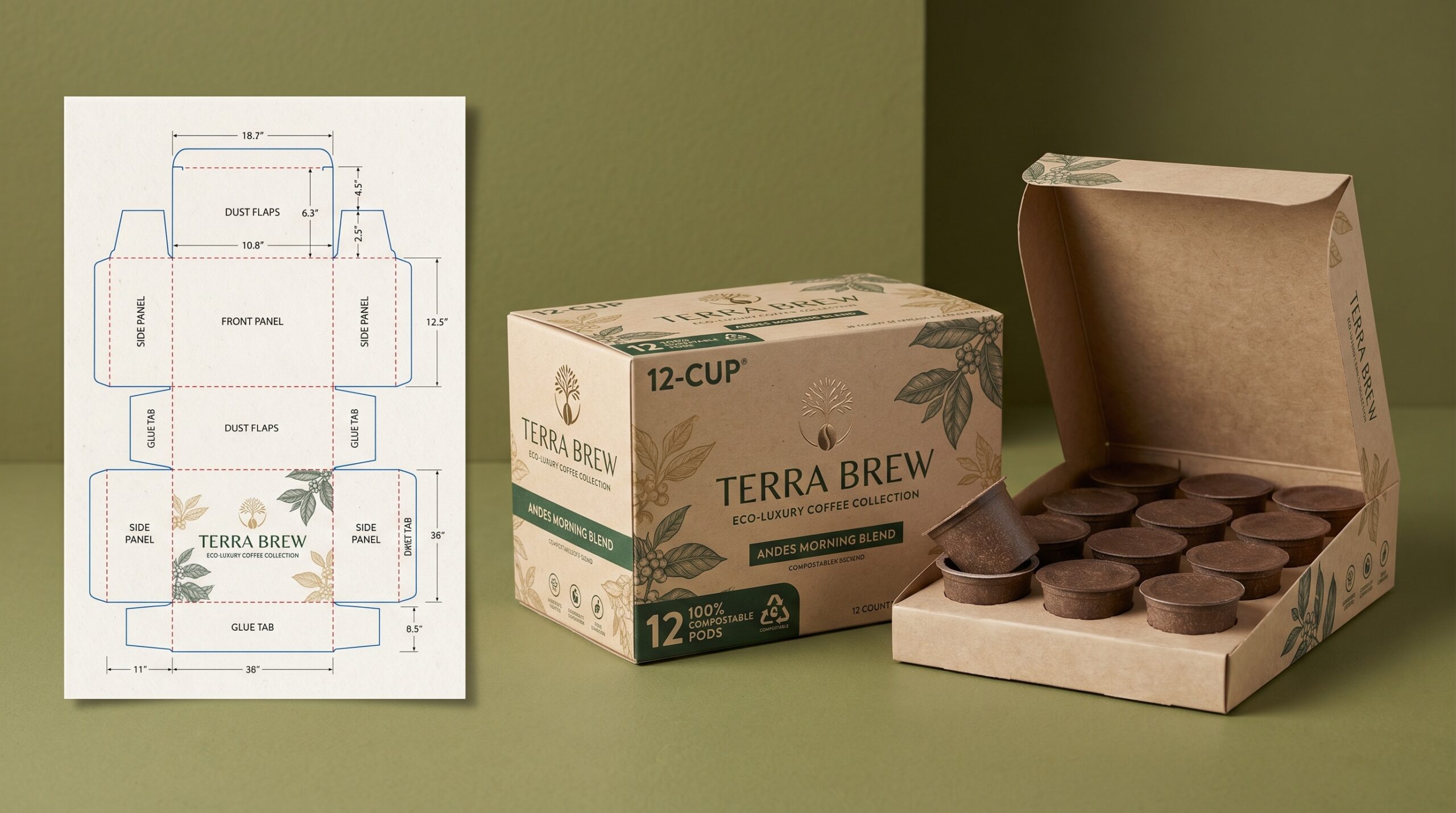
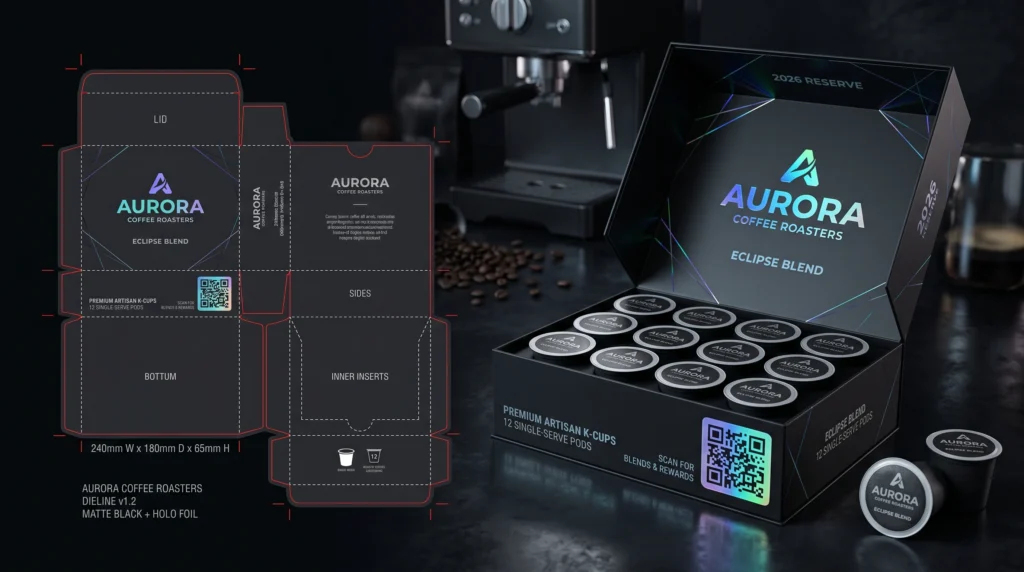
Key Insight: If you are exploring K-cup packaging design template files in Adobe Illustrator or Photoshop, make sure your dieline is set up correctly from day one. A good packaging dieline template saves time and prevents costly reprinting mistakes.
Food-grade packaging print standards also matter here. Both digital and flexo inks need to meet FDA food packaging requirements in the USA and the EU Packaging Directive for European markets.
Private Label and Small Roaster Packaging Is Booming
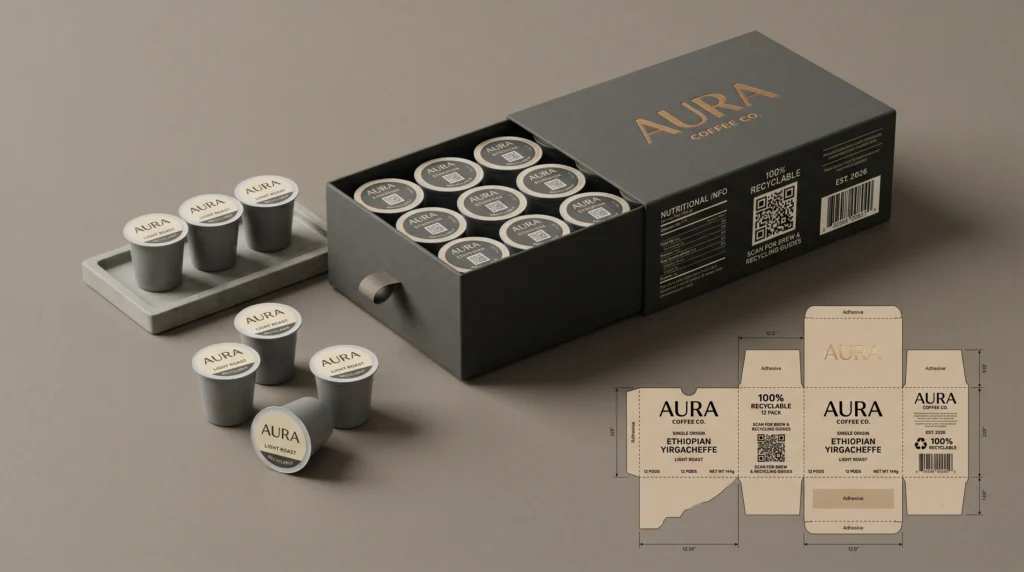
One of the most exciting stories in the coffee pod market 2026 is the rise of small brands.
Thanks to lower K-cup branding costs and better access to design tools, small roasters can now create stunning private label coffee pod packaging that competes with the big players.
Private label K-cup packaging design for small roasters has never been more accessible. Here is how small brands are winning:
1. Leaning into craft and story. Shoppers love artisan roaster packaging that feels personal. A hand-signed label. A photo of the farmer. A personal note from the roaster. These small details create huge loyalty.
2. Certifications as design features. Rainforest Alliance, Fair Trade packaging, and How2Recycle label icons are not just logos they are trust signals. Smart small brands feature them prominently.
3. Using AI design tools. AI-generated pod label art tools are helping small roasters create professional artwork at a fraction of the traditional cost. This levels the playing field significantly.
4. Subscription box K-cup design. Many small roasters are building subscription businesses. Subscription box K-cup design with themed packaging each month creates excitement and drives recurring revenue.
Regulatory Compliance as a Design Opportunity
Coffee pod packaging compliance for FDA and EU regulations in 2026 is a real concern for any brand. But savvy designers are turning compliance into a creative opportunity.
How to Design Custom Keurig Compatible Pod Packaging
If you are wondering how to design custom Keurig compatible pod packaging, start with the technical specs. Keurig compatible design requires precise dimensions, Keurig 2.0 compatible lid materials, and proper oxygen barrier sealing to pass machine compatibility tests.
From there, you have full creative freedom on the exterior. Your coffee pod label, box design, ink choices, and finishes are all yours to make beautiful.
Child-resistant pod packaging is another growing requirement especially for caffeinated products marketed to households with children. Smart packaging designers are creating child-resistant pod packaging that is also visually elegant. Safety and beauty can absolutely coexist.
Meeting green packaging certification standards like BPI compostable cert requires close work with your materials supplier. But once you earn that certification, it becomes a powerful marketing tool printed right on your box.
Top Takeaways: What Makes a Winning K-Cup Package in 2026?
Let us bring it all together. The best modern K-cup packaging design trends in 2026 combine:
- Eco-friendly pod packaging using compostable K-cup design, plant-based pod film, or mono-material K-cup design
- Premium packaging aesthetics whether minimalist coffee branding or bold maximalist capsule illustration
- Smart packaging features like QR code interactive packaging for premium coffee pods and NFC-enabled smart coffee packaging
- Storytelling through terroir-inspired pod packaging and transparent origin story packaging
- Technical excellence with proper barrier film technology, EVOH barrier film, and aroma preservation packaging standards
- Regulatory compliance meeting FDA food packaging rules and the EU Packaging Directive
- Trend-forward printing using digital printing capsule methods or flexographic pod label production at scale
Conclusion
The world of single-serve packaging has never been more exciting. In 2026, K-cup packaging design sits at the intersection of art, science, sustainability, and technology. Brands that embrace these trends will not just look good they will build deeper connections with customers, reduce environmental impact, and grow their business.
Whether you are a Keurig Dr Pepper supplier, a specialty roaster creating craft coffee pod aesthetic packaging, or a startup building your first private label coffee pod line the tools, trends, and technologies available today make it possible to create something truly extraordinary.
The best part? This is only the beginning. CPG packaging innovation will keep accelerating. And coffee lovers everywhere will keep reaching for the package that catches their eye first.
So go ahead invest in your packaging. Make it beautiful. Make it sustainable. Make it smart.
Your next loyal customer is already looking for you on that shelf.
Frequently Asked Questions
What are the top eco-friendly single-serve coffee pod packaging materials in 2026?
The top materials include PLA (polylactic acid), compostable mesh, paper fiber pod designs, plant-based pod film, and mono-material PP pods. These options balance pod shelf-life extension with environmental responsibility.
How do I create a custom Keurig compatible pod packaging design?
Start with the official Keurig compatible design dimensions. Then build your packaging dieline template in Adobe Illustrator or Photoshop. Choose your materials (ensuring Keurig 2.0 compatible lid compliance), then apply your visual design color, typography, illustration, and finish.
What certifications should my K-cup packaging have?
Look into BPI compostable cert, How2Recycle label, Rainforest Alliance, Fair Trade packaging, and SFI/FSC certified paper. These meet FDA food packaging standards in the US and align with the EU Packaging Directive.
Is digital printing or flexographic printing better for coffee pod labels?
Digital printing capsule labels are better for small runs and seasonal designs. Flexographic pod label printing is more cost-effective for large volumes. Both can produce beautiful, food-grade packaging print results.
What is the biggest K-cup packaging design trend in 2026?
Regenerative packaging design and mono-material K-cup design are the hottest trends right now. Combined with AI-generated pod label art and NFC-enabled smart coffee packaging, these trends are defining the future of K-cup packaging design.