Your product is ready. The formula is perfect. But then the boxes arrive and the bottle rattles inside, or the lid will not close. Sound familiar? Getting cosmetic box dimensions right is the simple step that saves money, protects products and makes your brand look great on the shelf.
This easy guide gives you a cosmetic box size chart, a step-by-step way to measure your product, and cosmetic packaging design ideas that are trending in 2026. You will also learn the small mistakes that cost beauty brands the most, and how to avoid them.
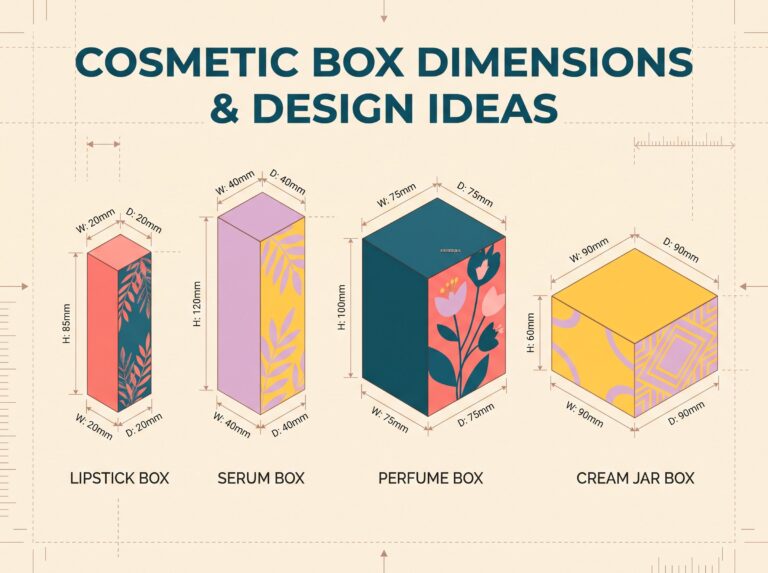
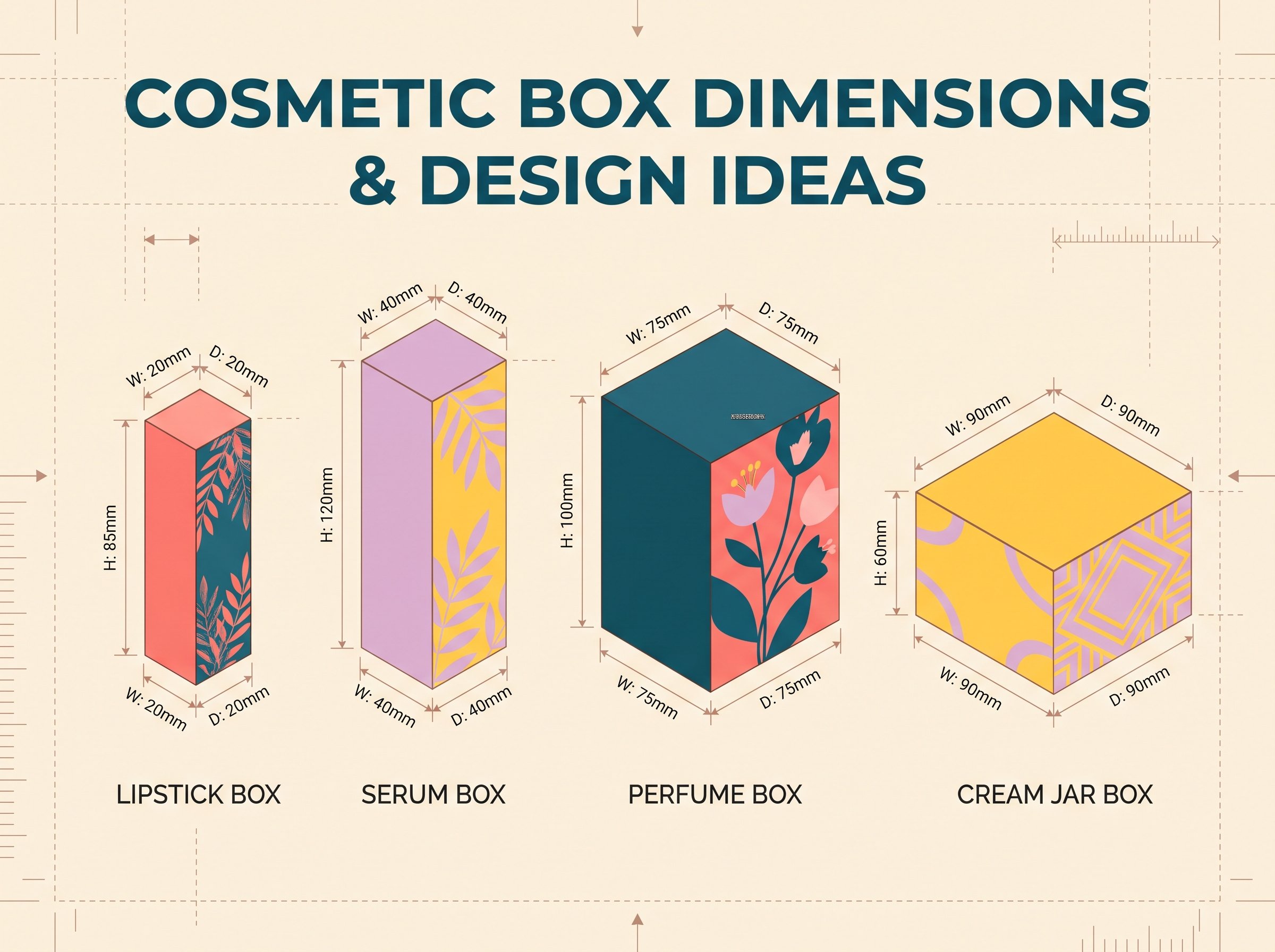
Cosmetic box dimensions are written as Length × Width × Depth (L × W × D), measured from the inside of the box. Measure your product at its widest points, then add 1–3 mm of clearance on each side (more if you use an insert). A standard lipstick box is about 0.9 × 0.9 × 3.3 inches, and a 30 ml serum box is about 1.5 × 1.5 × 4.5 inches.
Key takeaways
- Always order by inside dimensions, not outside.
- Use the L × W × D order so your supplier reads it the right way.
- Leave a little room, but not too much. A snug fit stops product damage and lowers shipping costs.
- Pick your box style, paperboard thickness and insert before you lock in the size.
- Great beauty packaging design mixes the right size with smart colors, finishes and clear labels.
What Are Cosmetic Box Dimensions?
Cosmetic box dimensions are the three measurements that tell a printer how big to make your box. They are always written in the same order: Length × Width × Depth.
- Length (L): the longer side of the box opening.
- Width (W): the shorter side of the box opening.
- Depth (D): the height, from the opening to the bottom.
Inside vs outside dimensions
This is where many brands go wrong. Inside dimensions are the space your product sits in. Outside dimensions include the thickness of the board. A box made with 18pt board adds about 0.5 mm to every wall.
For custom cosmetic boxes, give your supplier the inside size. That way your bottle, jar or tube fits every time. Use outside size only when you need to fit a shelf, a display or a shipping mailer.
Inches or millimeters?
US buyers often use inches. Most printers and dieline files use millimeters. Pick one unit and stick with it on every order. A small rounding slip can turn a snug box into a loose one.
Also Read: The Role of Custom Cosmetic Packaging in Building Brand Trust
How to Measure Your Product for the Perfect Box (5 Easy Steps)
Measuring takes five minutes and saves you from a costly reprint. Here is the simple, proven method packaging pros use.
- Use a caliper or a hard ruler. A soft tape bends and adds errors. A digital caliper is best.
- Measure at the widest points. Include the cap, pump, dropper or shoulder. These parts are often wider than the bottle body.
- Add clearance. Add 1–2 mm to length and width and 2–3 mm to depth. This lets the product slide in without a fight.
- Add room for an insert. A paperboard or foam insert can add 3–10 mm. Measure the insert, not just the product.
- Ask for a sample or a printed dieline. Test-fit your real product before you approve a full run.
Pro tip: If you sell a set (like a serum plus a cream jar), lay the items side by side, measure the whole group, then add clearance to the group size.
Standard Cosmetic Box Size Chart (Inches & mm)
Use this cosmetic packaging size chart as a starting point. These are common inside dimensions for popular beauty products. Your exact size depends on your bottle or jar, so always measure first.
| Product | Common size | Box size (L × W × D, inches) | Box size (mm) | Best box style |
|---|---|---|---|---|
| Lipstick box | Standard tube | 0.9 × 0.9 × 3.3 | 23 × 23 × 85 | Tuck end, sleeve |
| Lip gloss box | 5–8 ml | 1 × 1 × 4.5 | 25 × 25 × 115 | Tuck end |
| Mascara box | 8–10 ml | 1 × 1 × 5.5 | 25 × 25 × 140 | Tuck end |
| Nail polish box | 15 ml | 1.25 × 1.25 × 3 | 32 × 32 × 76 | Tuck end, window |
| Serum / dropper box | 30 ml (1 oz) | 1.5 × 1.5 × 4.5 | 38 × 38 × 115 | Tuck end + insert |
| Foundation box | 30 ml | 1.75 × 1.25 × 5 | 45 × 32 × 127 | Tuck end |
| Perfume box | 50 ml | 2.25 × 1.5 × 4.75 | 57 × 38 × 120 | Rigid, tuck end |
| Perfume box | 100 ml | 2.5 × 2 × 6 | 64 × 51 × 152 | Rigid box |
| Cream jar box | 50 g | 2.5 × 2.5 × 2 | 64 × 64 × 51 | Tuck end, rigid |
| Eyeshadow palette box | 6–12 pans | 6 × 4 × 0.75 | 152 × 102 × 19 | Sleeve, two-piece |
| Soap box | 4–5 oz bar | 3.5 × 2.5 × 1.25 | 89 × 64 × 32 | Window, sleeve |
| Lotion box | 200 ml | 2.25 × 2.25 × 7 | 57 × 57 × 178 | Tuck end |
Sizes are typical starting points, not fixed rules. Bottle shapes vary by supplier.
Board Thickness, Clearance & Box Styles That Change Your Size
The size of your box is not just about the product. The board, the gap and the box style all change the final numbers.
Paperboard thickness guide
| Board thickness | Approx. wall (mm) | Best for |
|---|---|---|
| 14pt SBS paperboard | 0.36 | Lip balm, small samples |
| 16–18pt SBS | 0.41–0.46 | Lipstick, mascara, serum boxes |
| 20–24pt SBS or Kraft | 0.51–0.61 | Perfume, cream jars, heavier glass |
| 1.5–2 mm rigid chipboard | 1.5–2.0 | Luxury perfume, gift sets |
| E-flute corrugated | 1.5 | Shipping, subscription and PR boxes |
How much clearance to leave
| Product type | Side clearance | Depth clearance |
|---|---|---|
| Plastic tube or stick | 1 mm | 2 mm |
| Glass bottle | 1.5–2 mm | 3 mm |
| Product with insert | Measure the insert | 2 mm above insert |
| Fragile glass + shipping | Use insert or padding | 3–5 mm |
Box styles and what they mean for size
| Box style | Size tip | Looks and feels |
|---|---|---|
| Reverse tuck end | Most size options, lowest cost | Clean retail look |
| Rigid two-piece box | Add 2–4 mm for thick walls | Luxury packaging feel |
| Sleeve and tray (drawer) | Tray inner size is what counts | Great unboxing experience |
| Window box | Keep window away from folds | Shows the product |
| Magnetic closure box | Leave room for the flap | Premium gift style |
8 Common Sizing Mistakes (And Quick Fixes)
Most packaging problems come from a few small slips. Here are the pain points beauty brands tell us about most, and the simple fix for each.
| Pain point | What happens | Quick fix |
|---|---|---|
| Ordering outside size | Product will not fit | Always give inside dimensions |
| Wrong L × W × D order | Box made the wrong shape | Length and width = opening; depth = height |
| Forgetting the cap or pump | Lid will not close | Measure the widest and tallest point |
| Too much empty space | Product rattles and breaks | Keep clearance to 1–3 mm or add an insert |
| Oversized boxes | Higher dimensional weight shipping fees | Size down and right-size mailers |
| Mixing inches and mm | Rounding errors | Pick one unit for every order |
| No test sample | Costly full reprint | Order a sample box or prototype first |
| Ignoring label space | Text too small to read | Plan room for INCI ingredients, net weight and barcode |
Getting these right means fewer returns, happier customers and lower packaging costs.
10 Creative Cosmetic Packaging Design Ideas That Sell
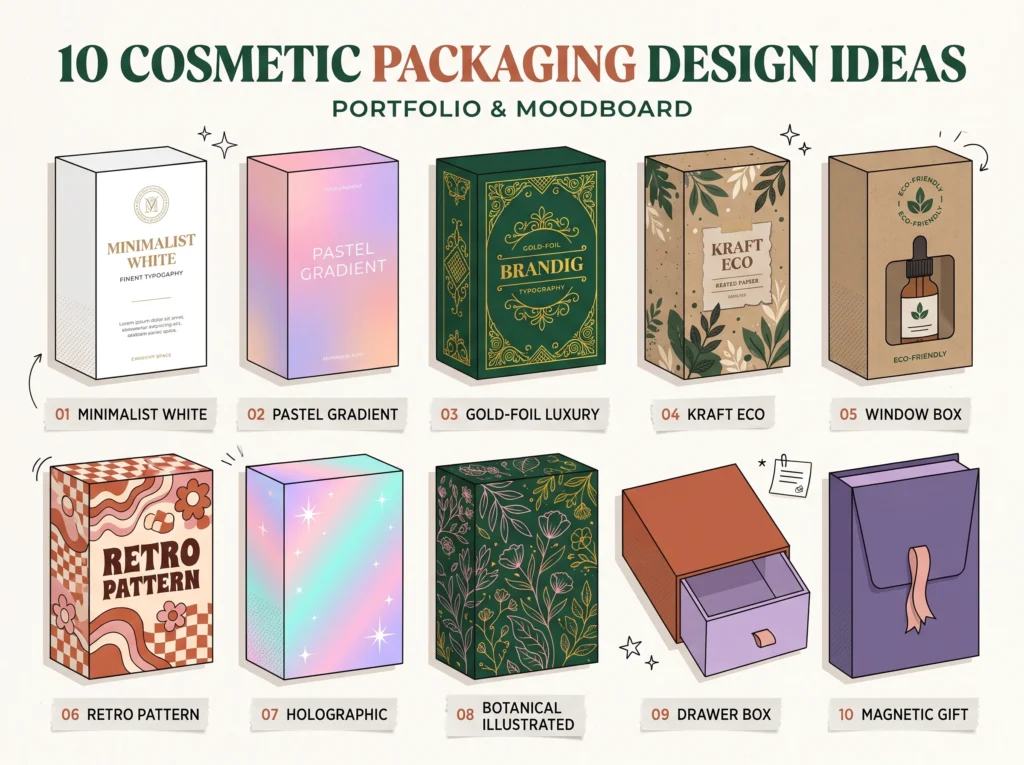
The right size protects your product. The right design sells it. These cosmetic packaging design ideas work for startups and big beauty brands alike.
- Go minimalist (“skinimalism”). Clean white or soft neutral boxes, one bold logo and lots of space. It looks calm, clean and premium.
- Use a signature brand color. Pick one Pantone shade and own it. Shoppers spot your box on the shelf in seconds.
- Add luxury finishes. Hot foil stamping, embossing, debossing and spot UV make a simple box feel expensive.
- Try soft-touch lamination. A velvety matte finish invites people to pick the box up. Touch builds trust.
- Choose eco-friendly materials. Kraft paper, FSC-certified paperboard and soy-based inks show you care about the planet.
- Add a die-cut window. Let shoppers see the color of a lipstick or the shape of a bottle.
- Design for unboxing. A sleeve and tray box, a printed inside message or a custom insert creates a great Instagram unboxing moment.
- Play with retro and nostalgic art. Bold patterns and simple line art feel fun and familiar.
- Use botanical illustrations. Leaves, flowers and fruit are perfect for organic skincare packaging and natural brands.
- Make a matching product line. Use the same layout with a different color for each shade or scent. It makes your whole range look organized.
Top Cosmetic Packaging Trends for 2026
Beauty packaging is changing fast. These are the 2026 packaging trends leading industry reports keep pointing to.
| Trend | What it means | Easy way to use it |
|---|---|---|
| Skinimalism | Fewer, simpler products and calm designs | Cut extra graphics and use one hero color |
| Paperboard over plastic | Paperboard use is growing while plastics decline | Switch outer boxes to recyclable paperboard |
| Refillable packaging | Refill models stay, if they are easy to use | Sell a refill pouch in a smaller box |
| Connected packaging | QR codes, NFC tags and Digital Product Passports | Add a QR code that links to how-to videos or ingredients |
| Sensory and tactile design | Textures you can feel | Use embossing or soft-touch coating |
| Retro and nostalgic art | Vintage patterns with a modern twist | Try a bold pattern on a simple box shape |
| Universal design | Packs that are easy for all hands to open | Add pull tabs and clear, large text |
| Mono-material packs | One material, easier to recycle | Use paper inserts instead of foam |
You do not need to follow every trend. Pick one or two that fit your brand and your customer.
Label Space, Rules & Shipping: Plan Before You Size
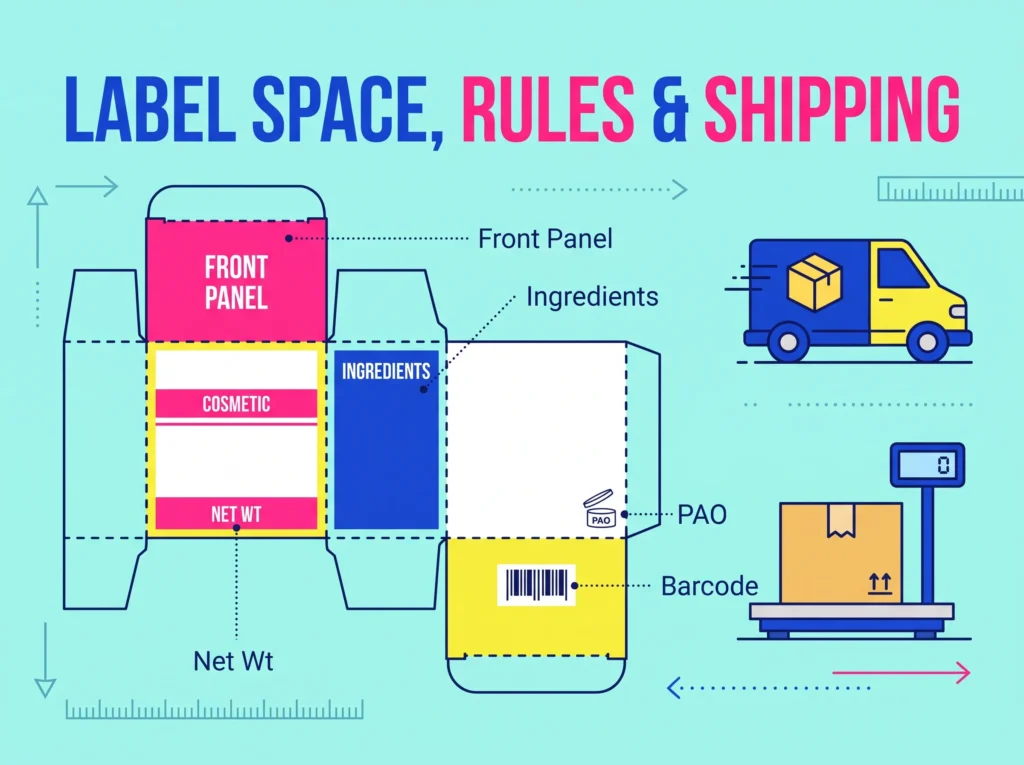
A beautiful box still needs room for the facts. Plan your label panels before you lock in the size.
What US cosmetic labels usually need
- Front (principal display) panel: product name and net quantity (in both US and metric units).
- Information panel: INCI ingredient list in order of amount, warnings, and the maker or distributor’s name and address.
- MoCRA contact info: the Modernization of Cosmetics Regulation Act asks brands to list a US contact for reporting bad reactions.
- PAO symbol (the open-jar icon, like “12M”) and batch code. These are required in the EU and UK and good practice in the US.
- Recycling marks: a How2Recycle label or simple recycling icon builds trust.
Rules change, so check the latest FDA cosmetic labeling guidance before you print.
How size affects shipping costs
Carriers charge by size, not just weight. This is called dimensional (DIM) weight. UPS and FedEx commonly divide L × W × H (inches) by 139 to get a billable weight. A box that is just one inch too big on each side can bump you into a higher price.
If you sell on Amazon FBA, box size also decides your size tier and fees. Right-sized custom printed boxes save money on every order.
Your Quick Checklist Before Ordering Custom Cosmetic Boxes
Run through this list before you approve your order. It takes two minutes.
- Product measured at its widest and tallest points
- Size written as L × W × D, inside dimensions, in one unit
- Clearance added (1–3 mm)
- Insert type chosen and measured
- Box style and paperboard thickness picked
- Label space planned for ingredients, net quantity and barcode
- Artwork placed on the correct dieline (CMYK, 300 DPI, 3 mm bleed)
- Sample or prototype test-fitted with the real product
Frequently Asked Questions
How do you measure cosmetic box dimensions?
Measure the inside of the box as Length × Width × Depth. Length and width are the sides of the opening. Depth is the height from the opening to the bottom.
What is the standard size of a lipstick box?
A common lipstick box size is about 0.9 × 0.9 × 3.3 inches (23 × 23 × 85 mm). Always check against your own tube.
What size box do I need for a 30 ml bottle?
A 30 ml dropper bottle usually fits a box about 1.5 × 1.5 × 4.5 inches. Taller droppers may need a little more depth.
What size is a perfume box?
A 50 ml perfume box is often about 2.25 × 1.5 × 4.75 inches. A 100 ml box is about 2.5 × 2 × 6 inches. Bottle shapes vary a lot.
Should I use inside or outside dimensions?
Use inside dimensions for your product fit. Use outside dimensions only to fit shelves, displays or shipping cartons.
How much space should I leave around my product?
Leave 1–2 mm on each side and 2–3 mm on top. Fragile glass may need an insert or more padding.
What cardboard thickness is best for cosmetic boxes?
Most cosmetic boxes use 16–18pt SBS paperboard. Heavier glass and perfume do better with 24pt board or a rigid box.
Can I order custom-size cosmetic boxes in small quantities?
Yes. Many packaging suppliers offer low minimum order quantities (MOQ) for startups and small brands, often with a sample first.
What are the best cosmetic packaging design ideas for a small business?
Start simple. A clean minimalist layout, one signature color, a single foil or embossed logo and eco-friendly kraft boxes look premium on a small budget.
Final Thoughts: The Right Size + Smart Design = Boxes That Sell
Great packaging starts with the right cosmetic box dimensions. Measure carefully, order by inside size, leave a little room and test a sample. Then add a design that tells your brand story, from minimalist layouts to luxury foil finishes and eco-friendly materials.
When you get size and design right together, you protect your product, cut shipping costs and win more shelf space. If you want expert help with sizing, dielines and printing, the team at Prefine Packaging can guide you from first sample to final box.
Ready to start? Measure your product today and request your free custom quote.